How to Find the Best Local Food Anywhere You Go
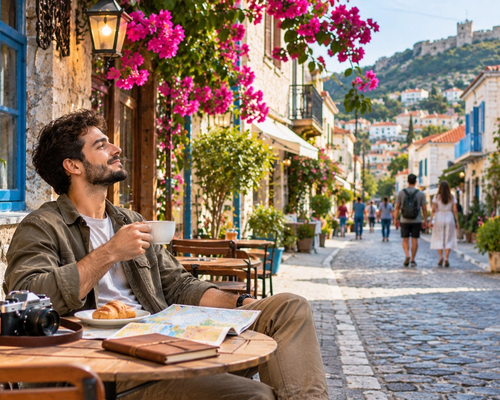
Some of the best travel memories begin with food you did not plan to eat. You walk past a bakery and smell something coming out of the oven. You notice a tiny restaurant filled with people at an hour when you were not even hungry yet. Someone at your hotel points you toward a place you would never have found yourself. Twenty minutes later, you are eating something you do not quite know how to pronounce and wondering why it never appeared on any of the lists you read before arriving.
Finding good local food is one of the great pleasures of travel, but it has become strangely complicated. Search for “best restaurants” in almost any major destination and you will find thousands of reviews, influencer recommendations, reservation platforms, viral dishes, and lists that often repeat exactly the same places. Research can help, but the best meals usually come from combining a little preparation with something much simpler: paying attention once you arrive.
Learn What the Place Is Actually Known For
Before looking for restaurants, look for dishes. Every destination has foods connected to its geography, history, climate, agriculture, and culture, and knowing even a few of them gives you a much better starting point. Instead of searching for “best restaurant in Naples,” find out what people in Naples traditionally eat and then search for places that specialize in those things.
This also prevents a common travel mistake: ordering the most internationally famous version of a country’s cuisine regardless of where you actually are. Italian food changes enormously between regions. So does Chinese, Indian, Mexican, Spanish, Turkish, and almost every other major cuisine. Traveling becomes much more interesting when you stop eating “Italian food” and start eating Roman, Sicilian, Tuscan, or Puglian food.
Ask People Where They Actually Eat
“Where should tourists eat?” and “Where do you eat?” are two completely different questions.
Ask the second one.
Hotel staff, taxi drivers, shopkeepers, guides, bartenders, and people you meet during the trip can be excellent sources, particularly if you make the question specific. Ask where they would go for lunch with friends, where their family eats on Sunday, or where they would take someone visiting from another city.
Specific questions tend to produce specific answers.
You may end up somewhere without beautiful branding or a famous chef, but that is often exactly the point.
Walk a Few Streets Away From the Main Attraction
Restaurants beside major landmarks serve a useful purpose. Sometimes you are hungry, tired, and want to sit down immediately with a nice view. There is nothing wrong with that.
But if food matters to you, walk another ten minutes.
Tourist-heavy areas often have high rents and customers who may never return, which can create different incentives from restaurants serving regular neighborhood diners. Moving even a few streets away can dramatically change the options.
Look for areas where people appear to be living rather than sightseeing. The restaurants there have to convince customers to return, not simply capture whoever happens to walk past.
Pay Attention to Who Is Eating There
A room full of locals is not an infallible sign of greatness, but it is useful information.
Watch what happens around lunchtime. Which places suddenly become busy? Where are workers stopping? Which bakery has a queue? Where are older residents having coffee? Which tables seem occupied by people who clearly did not find the restaurant through a travel guide?
You do not need to interrogate anyone.
Sometimes the best recommendation is simply observing where everyone goes.
Look for Shorter Menus
A menu containing pizza, sushi, burgers, pasta, curry, steak, tacos, and forty-seven other dishes should raise at least a small question.
Restaurants that specialize often do fewer things better.
This is particularly true for traditional places built around a specific dish or category: noodles, grilled meat, dumplings, seafood, soup, sandwiches, pastries, or regional specialties.
A short menu can indicate that the kitchen is focused, ingredients turn over regularly, and the restaurant knows what it wants to be.
There are exceptions, of course. But when traveling, specialization is often a useful clue.
Go to Markets, but Look Beyond the Famous Ones
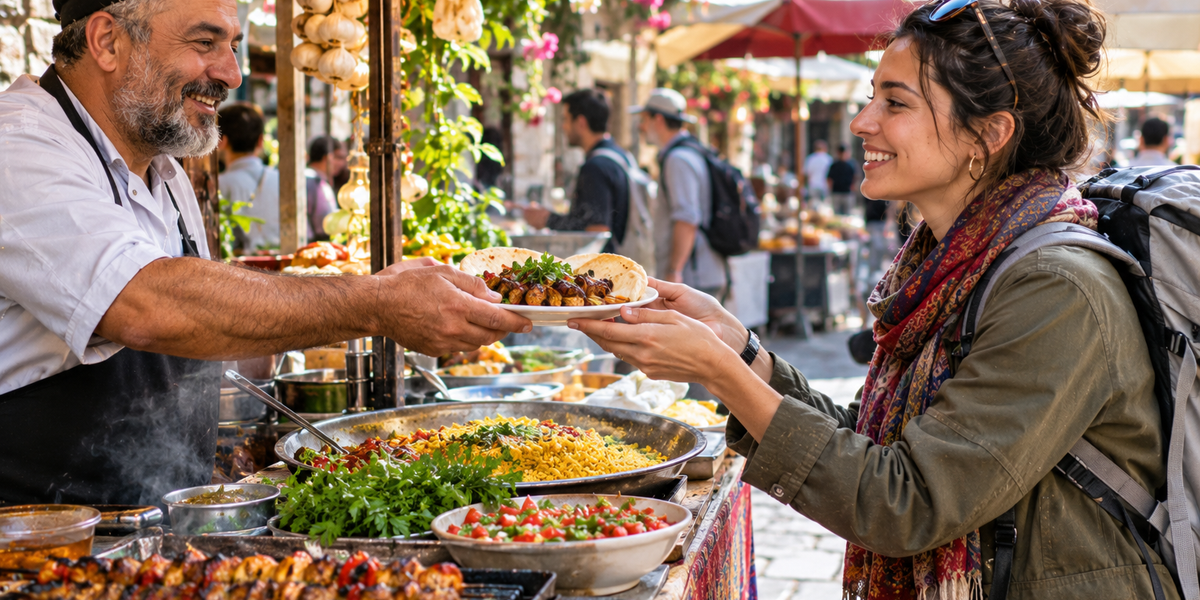
Food markets are one of the easiest ways to understand what a region eats. You see seasonal produce, cheeses, fish, meat, spices, bread, prepared foods, and ingredients that may never appear in supermarkets at home.
Famous markets can be wonderful, but some gradually become attractions themselves.
Look for neighborhood markets too.
Even if you cannot cook during your trip, markets are useful for breakfast, snacks, picnic ingredients, and simple lunches. A piece of local cheese, good bread, ripe fruit, and something from a deli counter can become one of the best meals of the trip.
Use Reviews Differently
Online reviews are useful, but the overall rating tells you less than you might think.
Read what people actually say.
Look for repeated patterns. If dozens of people mention the same dish, pay attention. If recent reviews repeatedly complain that something has changed, that matters more than a glowing review from four years ago.
Photos can also tell you a surprising amount. Look at photographs uploaded by customers rather than only professional images from the restaurant. You can see portion sizes, atmosphere, menus, and what the food looks like on an ordinary Tuesday rather than during a professional shoot.
The goal is not to find a restaurant with a mathematically perfect score.
It is to gather clues.
Do Not Automatically Reject a Place Because Tourists Like It
The obsession with finding places “only locals know” can become silly.
Sometimes famous restaurants are famous because they are genuinely excellent. A bakery that has been operating for a century may attract tourists and still make extraordinary bread. A legendary pizza shop may have a line of visitors outside because the pizza really is worth waiting for.
Local and tourist are not opposite categories.
The better question is whether the place still cares about what it serves.
Eat at the Hours Locals Eat
A restaurant can feel completely different depending on when you arrive.
If dinner normally begins at nine and you arrive at six, the empty dining room does not necessarily mean the restaurant is unpopular. You may simply be eating at an hour when the kitchen normally expects visitors rather than residents.
Learning local meal times helps you understand the rhythm of a destination and often improves the atmosphere of the meal.
It can also lead to experiences you would otherwise miss: aperitivo in Italy, late tapas in Spain, long lunches in parts of the Mediterranean, night markets in Asia, or early morning breakfasts built around foods you might normally associate with lunch.
Food makes more sense when you experience it inside the culture that created it.
Follow the Specialty
If a place is famous for one thing, order that thing.
Do not go to the legendary dumpling restaurant and decide this is your opportunity to test the fried rice. If a bakery is known for one pastry, try the pastry. If everyone around you is eating the same bowl of soup, there is probably a reason.
Travel is one of the best opportunities to temporarily stop ordering your usual favorites.
Let the place choose for you occasionally.
Learn to Recognize Tourist Menus Without Becoming Snobbish
There are familiar warning signs: enormous menus translated into eight languages, photographs of every dish, employees aggressively inviting people inside, and locations directly beside major attractions.
None automatically guarantees bad food.
But several together may suggest that convenience and location are doing more work than the kitchen.
The important thing is not becoming judgmental. Sometimes you want the restaurant overlooking the famous square. You are paying partly for the view, and that can be completely worthwhile.
Just know what you are choosing.
Try the Ordinary Food
Travel food culture tends to focus on spectacular dishes, but ordinary food often tells you more.
What do people eat for breakfast? What sandwich do they grab during work? What is the cheap lunch? What snack do children buy after school? What does someone cook when they do not feel like cooking?
These foods rarely become the centerpiece of travel television shows, but they can be surprisingly memorable.
The humble bakery, neighborhood takeaway, supermarket deli, or street stall may teach you more about everyday food culture than the restaurant with the six-month reservation list.
Return Somewhere You Loved
There is an unnecessary pressure while traveling to make every meal different.
If you find somewhere wonderful, go back.
Order something else. Or order exactly the same thing.
Returning transforms the experience slightly. You already know where to sit. You understand the menu. Someone may recognize you.
For a brief moment, you stop feeling like a person constantly searching for the next place and start feeling like someone who has a place.
That feeling is one of the quiet pleasures of slower travel.
Leave Room for Accidents
Do your research, save restaurants on your map, make reservations where necessary, and learn what you want to eat.
Then leave some meals completely unplanned.
Because no amount of research can predict the bakery you will smell from half a street away, the tiny restaurant your taxi driver mentions, the market you accidentally walk through, or the place you choose simply because everyone inside looks like they are having a good time.
Those discoveries matter because they feel like yours.
Nobody sent you there.
The Best Meal May Not Be the Best Restaurant
Years later, you probably will not remember every restaurant rating.
You will remember eating something hot after walking through the rain. The tiny place where nobody spoke your language but somehow knew exactly what you wanted. The dinner that lasted three hours. The pastry you returned for every morning. The seafood eaten beside the water. The sandwich that cost almost nothing and tasted better than the expensive dinner from the night before.
Great travel food is partly about what is on the plate.
But it is also about where you are, who you are with, how hungry you were, what happened that day, and the fact that you may never experience that exact combination again.
So research enough to avoid wasting every meal.
Then put the phone away, walk around, follow the smells, watch where people are eating, and occasionally choose somewhere simply because it feels right.
The best local food is not always hidden.
Sometimes you just have to look beyond the first search result to notice it.