How to Travel Solo Without Being Lonely
Solo travel is often presented in extremes. In one version, it is the ultimate expression of freedom: waking whenever you want, changing plans without consulting anyone, eating wherever you like, and discovering some fearless new version of yourself somewhere between the airport and a beautiful foreign city. In the other version, it sounds quietly miserable: eating dinner alone, having nobody to talk to, and standing in front of an incredible view wishing there were someone beside you to say, “Look at that.”
The reality usually sits somewhere in between. Traveling alone can be wonderfully liberating and occasionally lonely, sometimes within the same afternoon. The goal is not to eliminate every moment of loneliness. Even people traveling with partners, friends, and families can feel lonely. The goal is to build a trip where being alone feels intentional rather than isolating, with enough opportunities for connection that you can enjoy your own company without feeling trapped inside it.
Choose a Destination That Works Well Alone
Some destinations naturally make solo travel easier. Walkable cities, places with good public transportation, destinations with active café cultures, and areas offering tours or group activities give you ways to spend the day without constantly needing another person. A city where you can walk out of your accommodation and immediately find streets, museums, markets, parks, restaurants, and public spaces tends to feel much easier alone than somewhere requiring a car for every activity.
Think about your personality too. If you already struggle with long periods alone, an isolated villa in the countryside may look beautiful online but feel very different on the fourth evening. A lively neighborhood in Lisbon, Rome, Tokyo, Copenhagen, Bangkok, or another city where people naturally spend time in public can make solo travel feel much more social without requiring you to constantly introduce yourself to strangers.
Stay Somewhere With a Little Life Around You
Where you stay can completely change the emotional experience of traveling alone. A beautiful hotel twenty minutes outside the center may offer peace, but returning to an empty room every evening can make the trip feel more isolated than expected. Staying somewhere central allows you to remain connected to the destination even when you are technically alone.
This does not mean you need to stay in a party hostel and share a room with eleven strangers. Small guesthouses, boutique hostels with private rooms, social hotels, homestays, and centrally located apartments can offer different levels of privacy while still keeping you close to activity. Sometimes simply having a café downstairs, a busy square nearby, or a neighborhood where you can walk safely in the evening makes an enormous difference.
Give Your Days Some Structure
Too much empty time can feel surprisingly heavy when you are traveling alone. At home, an unplanned Saturday might be relaxing because you have familiar routines and people nearby. In an unfamiliar city, waking up with absolutely no idea what to do can occasionally amplify the fact that you are by yourself.
Give each day one anchor. Book a museum, join a walking tour, plan a hike, reserve a cooking class, visit a market, or choose a neighborhood you want to explore. You do not need an hour-by-hour itinerary. You simply need enough structure to create momentum. Once you are out in the world doing something, the rest of the day often develops naturally.
Join Activities Where Conversation Happens Automatically
Meeting people is much easier when there is already a reason for everyone to be together. Walking tours, food tours, cooking classes, surf lessons, diving trips, language exchanges, group hikes, photography walks, and small day tours create natural opportunities for conversation without requiring you to walk into a bar alone and somehow manufacture a friendship.
The activity also removes pressure. If you meet someone interesting, perhaps you get lunch afterward or make plans for the following day. If you do not, you still spent several hours doing something worthwhile. This makes organized activities particularly useful for solo travelers because socializing becomes a possible benefit rather than the entire purpose.
Learn to Enjoy Eating Alone
For many first-time solo travelers, eating alone is the part they worry about most. Walking around alone rarely feels strange. Visiting a museum alone can actually be better. Sitting at a restaurant table by yourself, however, can initially feel as though everyone has noticed.
They usually have not.
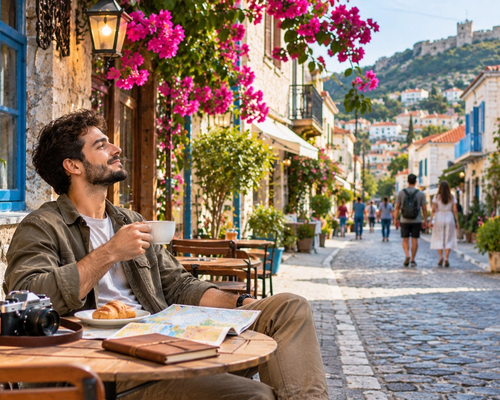
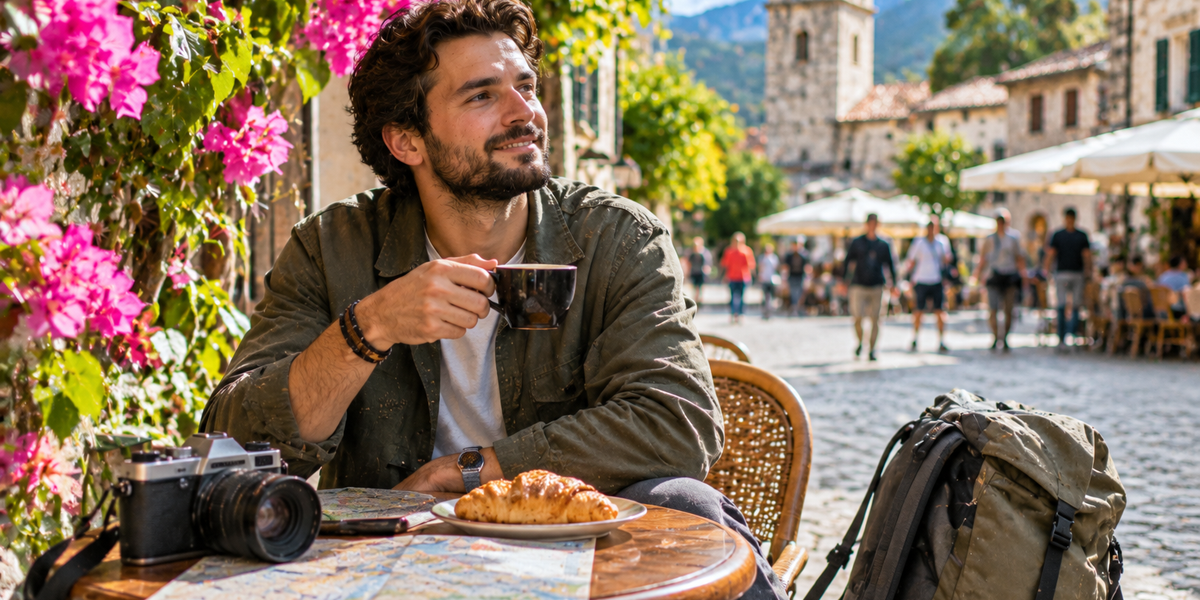
Start somewhere easy. Cafés, bakeries, food markets, ramen counters, casual restaurants, and places with bar seating tend to feel naturally comfortable for solo diners. Bring a book if you want something to do, although after a while you may discover that watching the room is enough.
Eventually, eating alone can become one of solo travel’s unexpected pleasures. Nobody is waiting for you to choose. You can order exactly what you want, stay as long as you like, and change restaurants at the last second because somewhere else smells better.
Do Not Hide Behind Your Phone
The phone is the easiest escape from the discomfort of being alone. The moment you sit at a café, you reach for it. Waiting for a train? Phone. Eating lunch? Phone. Sitting in a park? Phone.
Sometimes that is perfectly fine. But if you fill every quiet moment with your screen, solo travel can start feeling like ordinary life happening in a different location.
Look around occasionally. Watch people. Notice the architecture. Listen to conversations you cannot understand. Ask the waiter a question. Look at the menu properly. Sit beside the water without immediately photographing it.
Being alone becomes much more interesting when you actually participate in where you are.
Talk to People in Small Ways
You do not need to make lifelong friends for solo travel to feel social. Small interactions count.
Ask someone what they ordered. Talk to the person beside you on a tour. Ask the hotel receptionist where they actually eat. Say something to another traveler waiting for the same bus. Chat with the person running a small shop.
Most of these conversations will last five minutes and disappear.
That is fine.
A day containing several small human interactions can feel completely different from one where you spoke to nobody. Connection does not always need to become friendship to matter.
Keep in Touch With Home, but Do Not Live There Digitally
Talking to people you love can make solo travel feel grounded. Send photographs. Call your partner. Message your family. Tell a friend about the ridiculous thing that happened on the train.
But there is a balance.
If you spend every evening on long video calls or constantly messaging people back home, part of you never really arrives at the destination. The phone becomes a portal through which you remain emotionally somewhere else.
Stay connected enough to feel supported, but leave enough space for the trip itself to become your world for a while.
Save Something You Love for the Evening
Evenings can be the moment loneliness appears most strongly. During the day, cities provide constant activity. At night, couples go to dinner, groups meet for drinks, and returning alone to your accommodation can suddenly feel different.
Give evenings a little intention.
Book a food tour. Go to the cinema. Find live music. Attend a performance. Have dinner somewhere you genuinely want to try. Take an evening walk through a busy area. Buy something good to eat and watch a film in your room without feeling as though you have failed at traveling.
Not every night needs to become an adventure. Sometimes the best solo-travel evening is getting into bed early after walking twenty thousand steps and being delighted that nobody is trying to convince you to go back out.
Let Yourself Change Plans
One of the greatest advantages of traveling alone is that the itinerary belongs entirely to you.
Use that freedom.
If you love a place, stay longer. If you are bored, leave earlier. If you planned a museum but wake up wanting the beach, go to the beach. If you meet people and they invite you somewhere interesting, change your plans if it feels right and safe.
Solo travel becomes much more rewarding when you stop trying to execute the perfect itinerary you created at home and start responding to the trip you are actually having.
Understand the Difference Between Solitude and Loneliness
Being alone and being lonely are not the same thing.
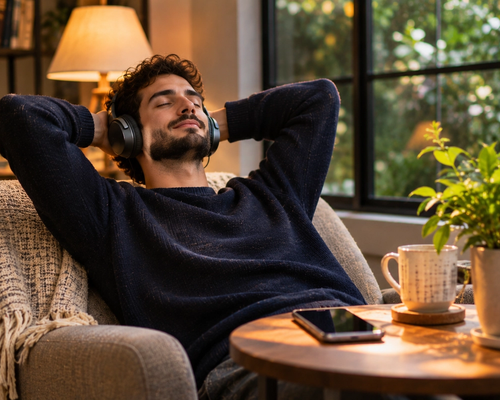
Solitude can feel spacious. You notice your thoughts. You move at your own pace. You spend an afternoon doing something nobody else in your life would have wanted to do.
Loneliness feels like wanting connection and not having it.
Learning to recognize the difference helps. If you are enjoying solitude, there is no reason to force yourself to socialize because solo travelers are supposedly meant to meet people. If you are genuinely lonely, however, staying alone in your room and hoping the feeling disappears may not help.
Go somewhere people are. Join something. Call someone. Sit at a busy café. Change accommodation if your current location feels isolating.
Solo travel gives you independence, but independence does not require pretending you never need other people.
Take Your Safety Seriously Without Becoming Afraid of Everything
Feeling secure has a major effect on whether solo travel feels enjoyable. Research the destination, understand how you will get from the airport or station to your accommodation, keep important documents secure, and be more cautious with alcohol when you do not have someone you trust beside you.
If something feels wrong, leave. You do not owe politeness to strangers who make you uncomfortable.
At the same time, try not to let caution become fear of every interaction. Most solo travel consists of ordinary moments with ordinary people. Good preparation allows you to relax because you have already considered the practical risks instead of worrying about them constantly.
Do Something You Would Never Have Chosen in a Group
Solo travel offers a rare opportunity to discover what you actually like when nobody else’s preferences are involved.
Maybe you spend four hours in a museum everyone you know would find boring. Maybe you wake up for sunrise. Maybe you visit three bookstores in one afternoon. Maybe you take a train to a tiny town simply because you liked the photograph.
There is nobody to negotiate with.
That freedom can reveal how many decisions in everyday life are quietly collaborative. Traveling alone removes the question, “What does everyone else want to do?”
For a while, you get to find out what your own answer is.
Accept That There May Be Lonely Moments
A beautiful sunset can make you wish someone you love were standing beside you. Something funny happens and you instinctively turn toward a person who is not there. You have an incredible meal and think about how much someone at home would have enjoyed it.
These moments do not mean solo travel was a mistake.
They mean you love people.
Loneliness can coexist with a wonderful trip. You can miss someone and still be glad you came. You can wish they were there and still appreciate the strange privilege of experiencing something entirely on your own.
You Come Home With Something That Belongs Only to You
Traveling with other people creates shared memories. Someone else remembers the terrible hotel, the missed train, the incredible dinner, and the joke that made everyone laugh for the rest of the trip.
Solo travel creates something different.
Nobody experienced the days exactly as you did.
You navigated the station. You found the restaurant. You made the decision to change plans. You figured out what to do when something went wrong. You sat alone somewhere beautiful and realized that being by yourself did not automatically mean something was missing.
That may be the most valuable thing solo travel teaches. The goal is not learning that you do not need anyone. Most of us do, and life is usually better because of the people we love.
It is learning that your own company can be good company too.
And once you know that, traveling alone stops feeling like the trip you take when nobody else can come.
It becomes a kind of trip worth choosing for itself.