Why We Romanticize the Lives of Strangers Online
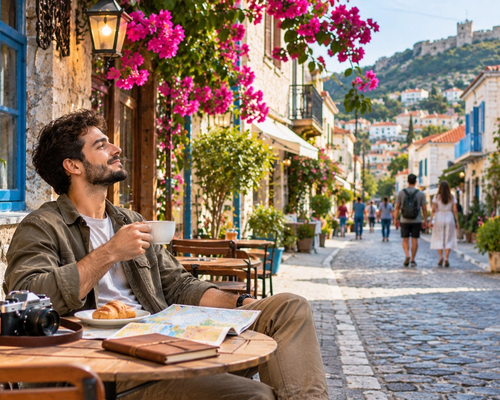
There is a particular kind of person we encounter online without ever actually knowing them. Maybe she lives in Copenhagen and rides a bicycle to buy flowers on Saturday mornings. Maybe he renovated an old house somewhere in the countryside and seems to spend his evenings cooking elaborate dinners under warm kitchen lights. Maybe it is a family traveling slowly through Europe, a woman living alone in New York, or someone whose mornings apparently involve linen sheets, handmade coffee, fresh bread, and absolutely no frantic search for missing keys. We watch fragments of these lives and begin constructing the rest. Before long, we are not simply following a stranger online. We are imagining what it might feel like to be them.
Social media makes this remarkably easy because it gives us access to people’s lives without giving us the whole truth of those lives. We see enough detail to create intimacy but not enough to destroy the fantasy. A bedroom, breakfast, outfit, holiday, relationship, or quiet Sunday afternoon becomes evidence from which we build an entire existence. The gaps are filled by our own imagination, and imagination is usually much more generous than reality.
We See the Scene Without Seeing What Came Before It
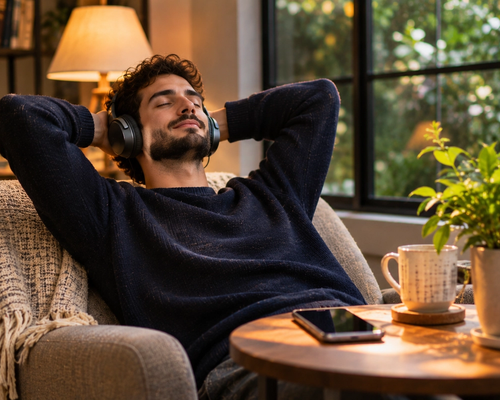
A photograph of someone drinking coffee beside a window contains no information about the argument they had twenty minutes earlier. A video from a beautiful holiday does not show the delayed flight, the money spent getting there, or the hour everyone was irritated with each other before filming. A perfectly arranged living room does not reveal the laundry piled outside the frame. We receive the finished scene without experiencing the ordinary mess surrounding it.
That distinction matters because we compare their visible moment with our entire day. We know about our bad mood, bank balance, unanswered emails, cluttered kitchen, insecurities, family problems, and everything we failed to accomplish. We know none of those things about the stranger on our screen. Their life therefore appears unusually coherent while ours feels complicated. It is not necessarily because their life is easier. We simply have access to completely different amounts of information.
The Unknown Parts Become Whatever We Want Them to Be
When information is missing, the mind fills the space. If someone posts beautiful photographs of their apartment, we may imagine their entire home is peaceful. If a couple appears affectionate online, we assume the relationship itself feels that way. If someone works remotely from beautiful cafés, we imagine freedom rather than deadlines. We rarely invent the boring explanation.
This is one reason strangers can sometimes be easier to romanticize than people we actually know. Real people eventually become complicated. We discover their annoying habits, difficult moods, insecurities, contradictions, and ordinary problems. Online strangers can remain beautifully incomplete. We know enough to become interested but not enough to become disillusioned. The mystery protects the fantasy.
Aesthetic Coherence Looks Like a Coherent Life
Social media has made aesthetics unusually powerful. Someone’s clothing, home, meals, travel, music, and daily routines can all be presented within the same visual language. Warm lighting, neutral colors, slow mornings, old buildings, books, flowers, beautifully plated food—the pieces begin telling one consistent story.
That consistency can create the impression that the person’s internal life must be equally organized. If everything looks calm, perhaps they feel calm. If their home looks beautiful, perhaps they are happy there. If their relationship photographs look tender, perhaps the relationship itself is effortless. We know logically that visual coherence does not guarantee emotional coherence, yet the association is difficult to resist.
A beautiful life and a beautifully photographed life are not the same thing. Online, however, they can look almost identical.
Sometimes We Are Really Romanticizing Our Own Unlived Life
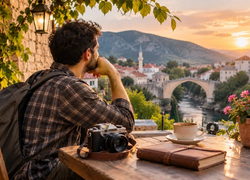
The strangers who fascinate us often represent something we secretly want. The woman living alone in Paris may represent independence. The family in the countryside may represent slowness. The person constantly traveling may represent freedom. The beautifully dressed stranger may represent confidence. The person who seems to spend afternoons reading and cooking may represent the time we wish we had.
In that sense, the fascination is not entirely about them. They become characters inside our own imagination. We use their lives to visualize possibilities for ours.
This can actually be useful. Envy and fascination sometimes contain information. If you repeatedly find yourself drawn to people who live more slowly, perhaps you do not necessarily want their house, wardrobe, or city. Maybe you want more space in your own schedule. If you constantly romanticize people who travel, perhaps what you want is novelty. The surface desire and the underlying desire are not always the same.
Ordinary Life Looks Different When Someone Else Frames It
One of social media’s strangest achievements has been teaching us that almost anything can look cinematic when framed correctly. Making coffee, walking to the market, opening a window, folding laundry, taking a train, reading in bed, preparing dinner—none of these activities is particularly extraordinary. Yet when someone else photographs them beautifully, they suddenly appear meaningful.
This reveals something important about romanticizing strangers: sometimes they are not living dramatically better lives. They are simply paying attention to parts of life we have stopped noticing in our own.
We may watch someone make breakfast online while eating our own breakfast without looking up. We admire their walk through the neighborhood while rushing through ours. Their evening appears peaceful because we see thirty carefully selected seconds of it, while our own evening disappears because we are scrolling through theirs.
Distance Makes Everything Easier to Idealize
We have always romanticized lives we cannot fully see. Before social media, people romanticized celebrities, writers, artists, travelers, aristocrats, people living in distant cities, and even previous generations. Distance removes inconvenient detail.
The difference now is scale. We can encounter hundreds of potentially romanticizable lives in a single week. They do not even need to be famous. A person with a few thousand followers can become the protagonist of an imaginary life inside someone else’s head.
This creates a peculiar form of intimacy. We know what someone’s kitchen looks like, where they went on holiday, what their children wore on Christmas, and what they ordered at a restaurant. Yet we may know almost nothing about how they actually experience their life.
Familiarity begins to feel like knowledge.
It is not always the same thing.
Algorithms Keep Showing Us the Fantasy We Respond To
If you linger over videos of countryside cottages, you will see more countryside cottages. Watch enough solo-travel videos and suddenly everyone appears to be traveling alone through Italy. Engage with minimalist homes and the internet begins presenting a world where nobody seems to own an ugly charging cable.
Gradually, a niche lifestyle can start looking normal simply because it dominates your feed. This can distort our sense of how other people actually live. We may begin comparing ourselves not with one unusually curated person but with an endless stream of people displaying unusually curated moments.
The feed creates a fictional neighborhood populated entirely by beautiful homes, interesting careers, successful relationships, perfect wardrobes, and people permanently on holiday. No real neighborhood could survive that comparison.
We Forget That Content Is Often Work
Another reason online lives can appear unusually polished is that producing that appearance may literally be someone’s job. The beautiful breakfast is not necessarily an accidental glimpse into an effortless morning. It may have been arranged, photographed, edited, and uploaded as part of a commercial content strategy.
This does not mean everything online is fake. A creator may genuinely love their home, partner, children, clothes, or travels. But authenticity and production can exist simultaneously. A real moment can still be carefully framed.
The problem begins when the viewer experiences professional storytelling as casual evidence of everyday life. What looks like someone simply existing beautifully may involve planning, equipment, editing, sponsorships, multiple attempts, and hours of invisible labor.
Romanticizing Is Not Always Harmful
There is an easy response to all of this: remind yourself that social media is fake and stop comparing yourself. But that explanation is too simple. Much of what we see online is real. The house exists. The trip happened. The relationship may genuinely be loving. The person might actually enjoy those slow Sunday breakfasts.
And romanticizing other lives is not necessarily unhealthy. Sometimes seeing someone live differently expands our understanding of what is possible. You discover a place you want to visit, a hobby you want to try, a way of decorating your home, a career you did not know existed, or a rhythm of life that feels closer to what you want.
The goal does not need to be becoming completely immune to other people’s lives. It is learning to separate inspiration from projection.
The Real Danger Is Becoming a Spectator in Your Own Life
The strangest consequence of constantly watching other people’s lives is that our own can begin to feel like the less interesting version. We wait for the holiday, apartment, relationship, body, wardrobe, career, or lifestyle that will finally make our existence feel as cinematic as theirs.
Meanwhile, ordinary life continues happening.
The coffee is already warm. Someone you love is sitting across from you. The evening light is already coming through your own window. Your neighborhood has streets you have stopped noticing. Your child is doing something they will eventually stop doing. Your parents are getting older. Your friends are changing. The version of your life you currently consider ordinary will one day exist only in photographs.
It is remarkably easy to miss those things while watching a stranger appreciate theirs.
Maybe We Should Romanticize Ourselves a Little More
There is something almost funny about how easily we can find beauty in someone else’s ordinary life while treating our own as background noise. Their trip to the grocery store looks charming. Ours is an errand. Their rainy afternoon is cozy. Ours is bad weather. Their old apartment has character. Ours needs renovating. Their quiet weekend is slow living. Ours feels like we did nothing.
Perhaps the lesson is not that we should stop romanticizing completely.
Maybe we should redirect some of it.
Take the long way home occasionally. Put flowers on the table for no reason. Make the breakfast you keep saving for weekends. Photograph ordinary people you love. Sit outside when the weather is good. Wear the clothes you are saving for something special. Look around your own neighborhood as though you arrived there yesterday.
Because somewhere online, there is probably a stranger living a life that looks beautiful to you.
And somewhere else, someone might look at a small fragment of yours and imagine exactly the same thing.